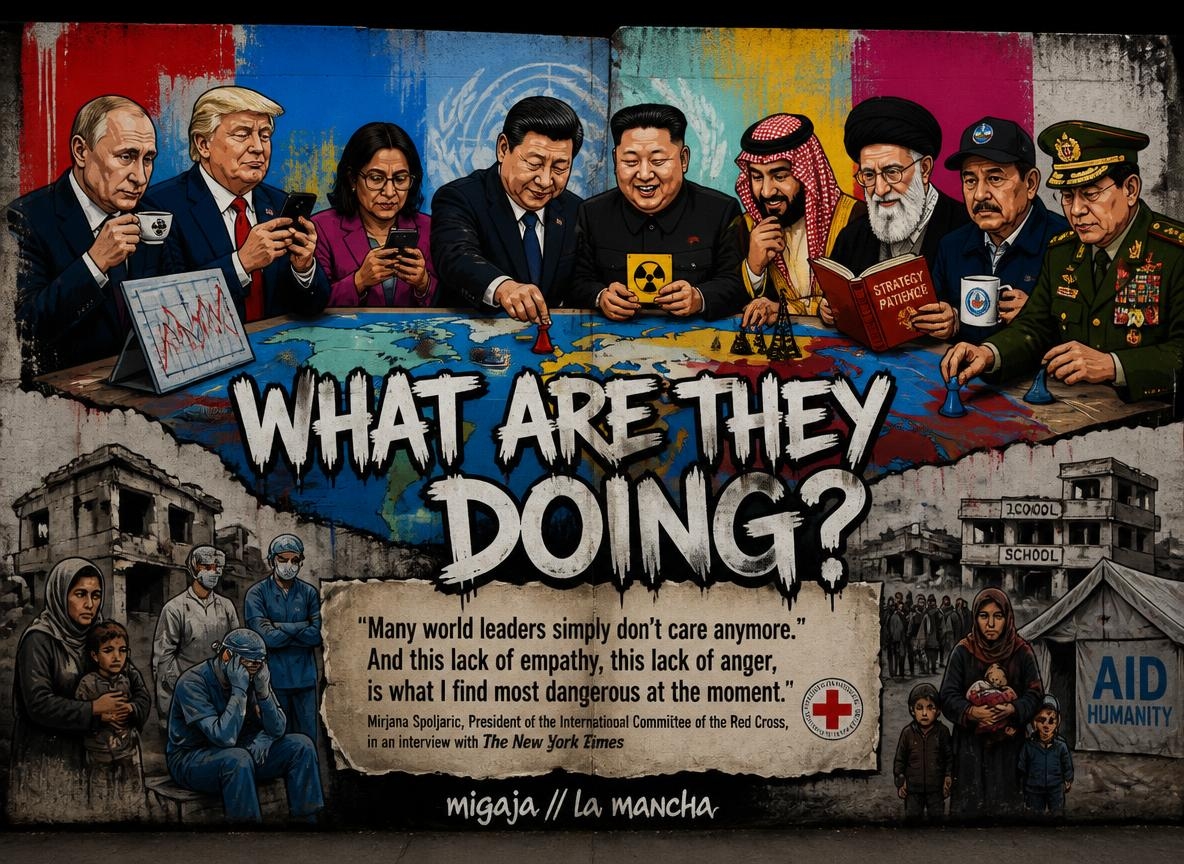
For two decades, authoritarian governments around the world have grown stronger, more coordinated, and more aggressive. They attack political opponents at home and work to undermine democracy abroad. Meanwhile, democracies themselves have backslid—as elected demagogues foment toxic polarization, erode institutional norms, and capture the very courts and watchdogs meant to check them.
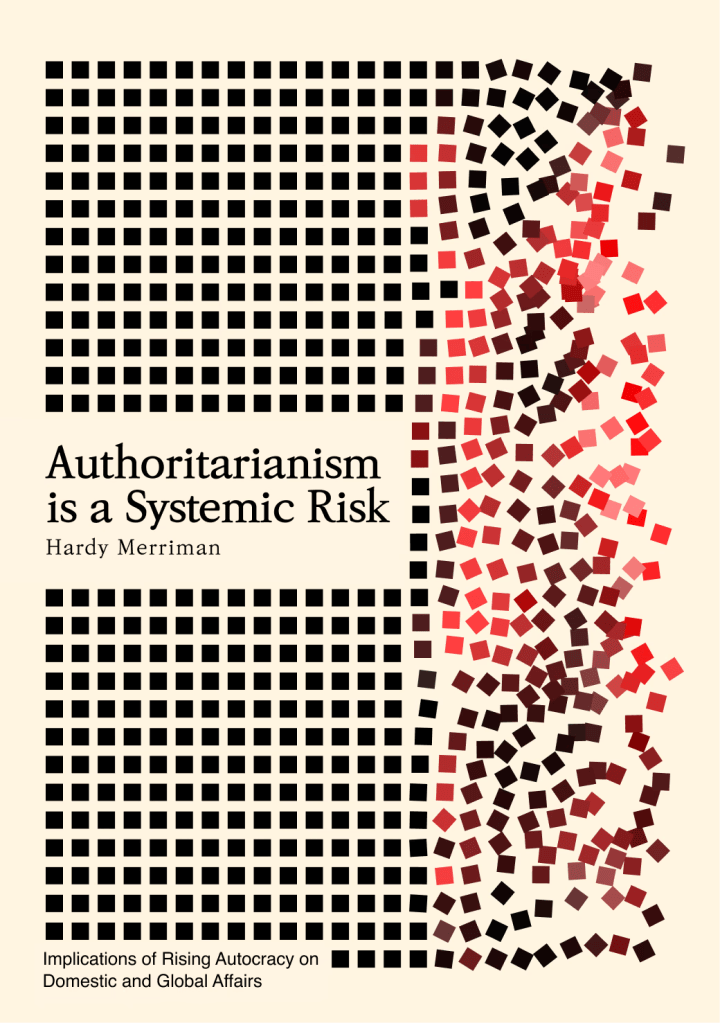
In “Authoritarianism Is a Systemic Risk,” a long-form essay published in September 20261, Hardy Merriman makes the case that this trend is not a passing storm but a systemic risk. Authoritarianism is a structural impediment to progress on nearly every issue that matters:
The world is amid a powerful autocratic wave. Over the last two decades, authoritarian governments have become stronger, more coordinated, and more aggressive at attacking political opponents and undermining democracy abroad.1 Simultaneously, democratic governments have backslid—as elected demagogues foment toxic polarization, violate institutional norms, crack down on civil society, increase corruption, and distort political systems in their favor.
A growing circle of people, organizations, and institutions recognize rising authoritarianism as a global crisis. Yet in too many countries this crisis has not galvanized the level of response needed to turn the tide.
There are several likely reasons for this. One is that authoritarianism can seem abstract—a threat, but one that is assumed to not require an immediate response. People may feel that an authoritarian leader may naturally weaken over time, or that it is someone else’s job to step up and confront this challenge.
Another reason is that people are confused about how to respond. Traditionally it has been the job of courts, independent media, and government watchdogs to try to rein in an out-of-control leader between election cycles. Yet authoritarians attack or capture these very same institutions and undermine their power.
A further challenge is people’s sense of denial. Those living in democracies have generally experienced a set of stable institutional arrangements (even when flawed or unfair) in their political, legal, and economic systems.2 Their experience of relative stability in the past can lead them to assume—erroneously—that a previously democratic country will not succumb to the chaos of backsliding and authoritarian rule.
Undergirding these reasons is the fact that people may not understand the dire stakes of rising authoritarianism in their country and the world as a whole. That is the focus of this publication. It is based on the view that if people understood the stakes, they would be much more likely to respond with urgency and firm resolve to signs of authoritarianism in their own society, and more likely to stand against it abroad.
The following pages present evidence that—similar to climate change—growing authoritarianism worldwide is a systemic risk. Research reveals that authoritarian governance is a structural impediment to achieving gains on nearly every issue vital to human development. When it grows unchecked, it produces rapid deterioration in peace and security, economic development and prosperity, environmental sustainability, accountability and justice, free and independent media, political affairs, and human rights.
These consequences compound over time. Therefore, rising authoritarianism demands resolute action now.
Hardy Merriman has worked in the field of civil resistance for over 20 years. From September 2022 to April 2025, he served as President of the International Center on Nonviolent Conflict (ICNC). Civil resistance is a way for ordinary people to fight for their rights, freedom and justice without using violence. Merriman has an extensive body of published work on the subject.
There comes a time when people from all walks of life must join together and stand united to protect their country, and then build a better future. Now is such a time:
The most common way people give up their power is by thinking they don’t have any.
—Alice Walker, novelist
____________________
(1) Merriman, Hardy. Authoritarianism is a Systemic Risk: Implications of Rising Autocracy on Domestic and Global Affairs. Washington, 2026.
Featured Image: Migaja La Mancha / Philosophical Graffiti

