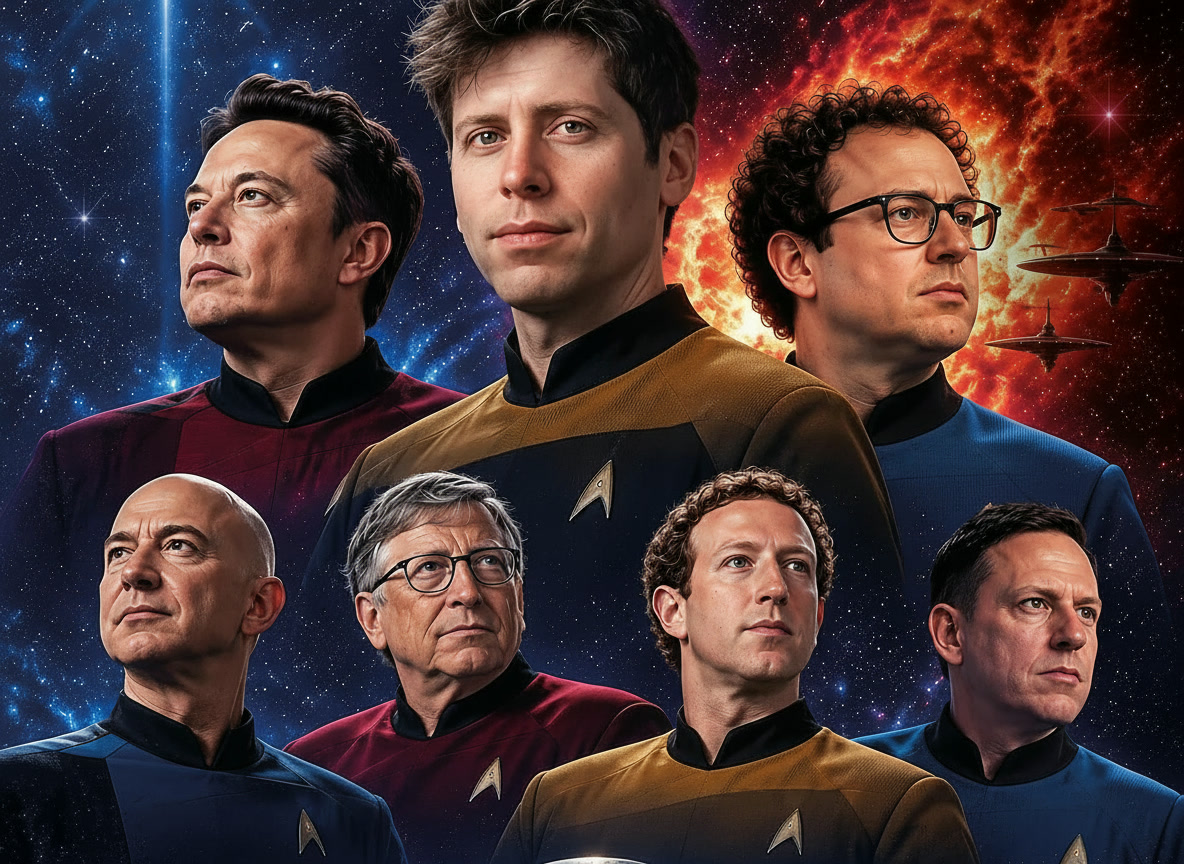
This week my admired Julian Diez1 published an article in the Spanish journal ABC on The science fiction that the technoligarchs read (and misinterpreted)2.
Science fiction—as a source of inspiration and a mechanism for imagining and designing futures—is today a subject of debate which is gaining relevance. There are good reasons for it3.
In March 2025, the Elsevier journal Technovation concluded a Rolling Special Issue dedicated to the interplay between science fiction and technological innovation. The project reached its conceptual completion with the publication of its introductory editorial, Science fiction and the quest for innovation4 (my highlight):
This special issue editorial examines the dynamic and evolving intersection of science fiction (SF) and innovation, spotlighting nine contributions that collectively offer contemporary debates at this crossroads. It shows how SF has transcended its traditional entertainment function to become a significant resource for strategic foresight, ethical deliberation, and organizational creativity. By synthesizing insights from management, cultural studies, design, and psychology, the editorial underscores SF’s capacity to illuminate not only technological possibilities but also the social, ethical, and political contexts in which technologies operate. The featured studies detail methods such as diegetic prototyping, speculative design, design fiction, and consumer-created “flash fiction,” illustrating the diverse applications of SF across industries and research domains. They also highlight critical tensions, including the risk of overlooking social justice concerns, the commodification of SF for corporate agendas, and the challenges of ensuring inclusivity in SF-driven innovation processes. Collectively, these contributions argue for the incorporation of SF into interdisciplinary research agendas and organizational practices, stressing that its transformative potential hinges on addressing the ethical, cultural, and power dynamics that shape real-world outcomes. By engaging with both techno-optimistic and critical perspectives, this issue offers a nuanced framework for harnessing SF’s creativity and anticipatory depth, advocating a turn toward more equitable, sustainable, and reflective innovation practices.
Individual contributions were published on a rolling basis throughout 2024, but this final framing paper synthesizes the entire body of research. Here is a brief highlight (quoting the behind-a-paywall editorial):
- In their investigation of the impact of SF on technological development, Messeni Petruzzelli et al. (2024) focus on the reactions to the SF series Black Mirror. They reveal that certain episodes led to significant increases in both online discussions and patent activity.
- Next, Sætra (2024) critiques existing approaches to scenario planning within sustainability reporting and Environmental, Social, and Governance (ESG) frameworks, arguing that they are often too narrowly focused and overlook critical dimensions such as social equity and inclusive economic growth.
- Das and Ray (2024) offer a unique perspective by examining the contributions of Indian film director and writer Satyajit Ray’s “Shonku Series” to techno-humane futures from a Global South perspective. The paper suggests that such culturally rooted SF can inspire technological development while embedding ethical considerations, offering alternative visions that prioritize human values over mere technological advancement.
- Marozzo et al. (2024) investigate the relationship between SF and individual creativity, especially for students with STEM (Science, Technology, Engineering, Mathematics) backgrounds.
- Turning from producers to consumers, Wolf et al. (2024) introduce “consumer flash fiction” as a novel methodology for the early sensing of far-future innovation opportunities. They propose that very short SF narratives written by non-expert consumers can capture visionary knowledge and reveal weak signals about future possibilities. This approach allows organizations to access a wider range of perspectives and ideas, including unexpected scenarios that may not emerge through traditional expert-driven methods.
- Fritzsche and Söldner (2025) explore how SF can be used in professional design training workshops to facilitate smart service design.
- Bennett and Vijaygopal (2024) explore how SF prototyping can address the needs of individuals with ambulatory disabilities.
- Zoccarato et al. (2024) investigate how SF influences employees’ innovative work behavior (IWB) within organizations. The findings reveal a dual pathway: normative pressures encourage the generation of SF-inspired ideas, while cognitive influences are crucial for promoting these ideas.
- Finally, Roussie et al. (2024) dig into the construction of SF narratives for foresight in the defense sector, analyzing 38 stories to uncover patterns in how SF attributes—such as the novum, historical extrapolation, and ethical parables—are utilized
The complete collection, exploring how speculative narratives shape strategic management and technological development, is available on the Technovation Special Issue page.
Nobody said reading media opinions had to be free. But when it comes to scientific research—where progress literally depends on open peer review—locking knowledge behind paywalls is far harder to justify. Don’t worry, though; If Science Fiction teaches us anything, it’s how to see where the future is headed. AI is already here, “generously” helping us “organize the world’s information and make it universally accessible and useful”—if you know what I mean.
I tasked one of my AI collaborators with synthesizing this vision. Here is what we came up with:
In an era of accelerating technologies that compound both risk and opportunity, navigating what lies ahead requires more than raw compute—it demands shared imagination. Science fiction is not mere entertainment; it is the infrastructure for collective intelligence, offering the narratives we need to democratize debate and anticipate alternative futures together. Intellectual property can no longer act as a fence around human foresight, but must evolve into an enabler of open, shared progress—just one of many legacy structures we must rethink. If we are to design tomorrow democratically, we must first have the freedom to imagine it collectively.
____________________
(1) You can discover why here (In Spanish 🤷)
(2) I am not highlighting any quotes—as is usually the case on this blog—because the content is behind a paywall. Consider it my form of peaceful protest against Spanish media. If they want people to pay to read their content, well, let them pay!
(3) Jariego, Francisco J. ‘¿Qué Puede Hacer La Ciencia Ficción Con El Futuro?:: Reflexiones Sobre La Ciencia Ficción, La Innovación y El Futuro En España’. Hélice 6, no. 1 (2020): 8–23.
(4) Appio, Francesco, Thomas Michaud, Sherryl Vint, and Lisa Yaszek. ‘Science Fiction and the Quest for Innovation’. Technovation 141 (March 2025): 103172. https://doi.org/10.1016/j.technovation.2025.103172.
Featured Image: New Star Trek Heroes. Guess who inspired this AI creation 😉

