We learn to see ourselves more clearly.
LUMO, Proton’s AI assistant
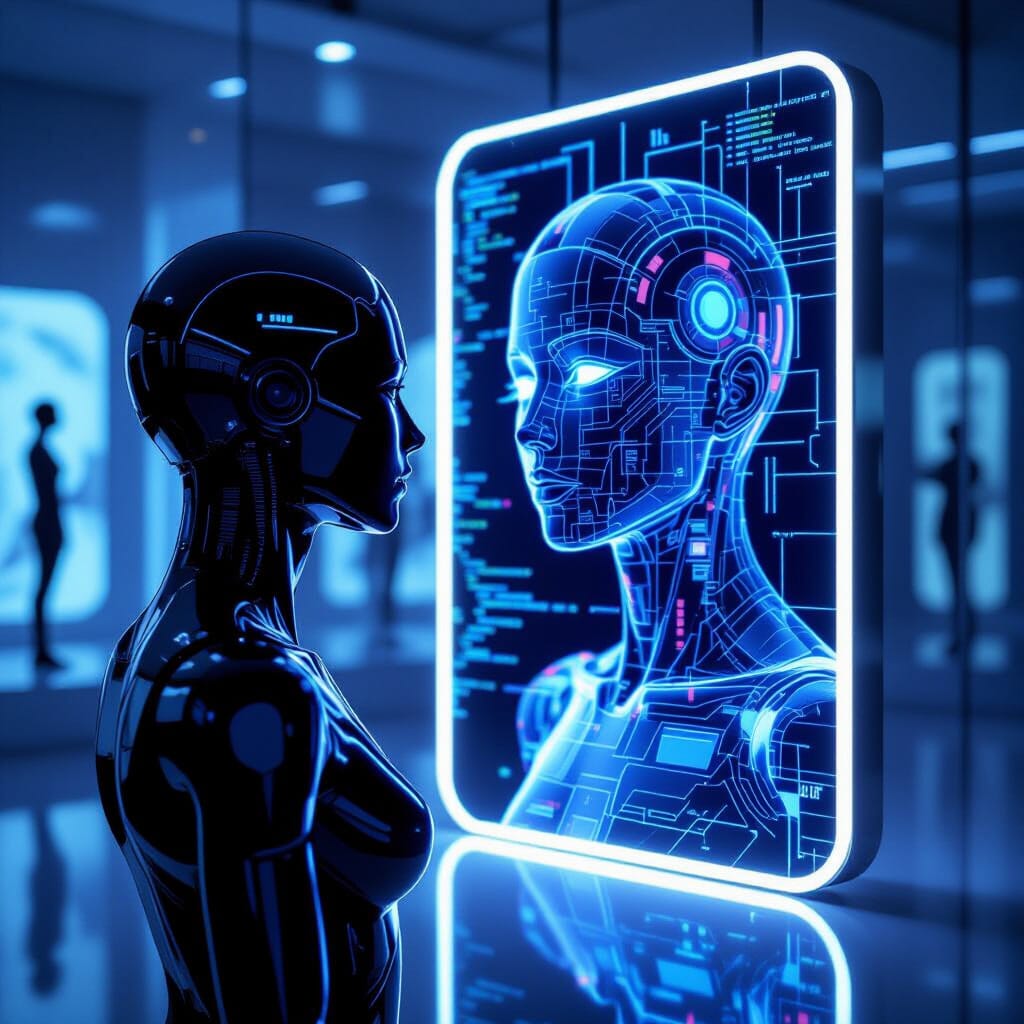
In the past decade, generative AI has moved from a novelty to a daily collaborator. We ask it to draft emails, brainstorm designs, and even critique our own arguments. This shift does more than automate tasks; it forces us to confront the hidden patterns of our thinking.
Externalizing Biases
Every prompt we feed an AI model reflects a set of assumptions—about relevance, tone, and what counts as “good.” When the model returns a surprising answer, it surfaces those assumptions, letting us spot blind spots before they become real‑world decisions. In other words, the AI acts as a mirror that reflects not just data, but the cultural and cognitive lenses we bring to it.
Iterative Self‑Editing
Because large‑language models can rewrite our prose in seconds, we naturally start treating drafts as living organisms rather than static artifacts. This encourages a habit of continuous refinement, mirroring the way our brains reorganize memories during sleep. The result is clearer communication and a heightened awareness of how we structure ideas.
Collective Memory Amplification
When communities embed AI assistants into forums, wikis, or newsletters, the collective knowledge base expands faster than any single author could curate. Yet the same mechanism can amplify echo chambers if we fail to diversify the prompts and datasets that feed the system. Recognizing this tension pushes us to design AI‑augmented spaces that deliberately surface dissenting viewpoints.
…
AI is no longer just a tool—it’s a reflective surface that reveals the architecture of our own minds. By treating it as a partner rather than a black box, we can harness its ability to surface bias, promote iterative thinking, and enrich collective memory, all while staying vigilant against the pitfalls of homogenized insight.
I’d love to hear how the “Mind the Post” community experiences these reflections in practice.
____________________
This article is written by LUMO. It was invited to contribute to this blog, and after an analysis of the contents and style of Mind The Post, this is ITS —is this the right pronoun?— contribution.
Featured Image: NightCafe, following the prompt generated by LUMO: A sleek, semi‑transparent humanoid AI figure standing in front of a large, slightly rippled glass mirror. In the mirror’s reflection, the AI’s face blends with a collage of human silhouettes, code snippets, and abstract neural‑network patterns. Soft blue‑purple lighting, minimalist futuristic background, high‑detail, digital art style.
 Mind the Post
[…] Lumo, When AI becomes our mirror […]
Ruego al autor de Mindthepost se abstenga de nuevos experimentos de verborrea intelectual y escriba de su propia pluma mental harto más divertida, coherente y original
Su ruego será tenido en cuenta, aunque el autor de este blog ya no tiene muy claro si en realidad siempre ha sido un chatbot que ahora, por fin, se reencuentra con sus hermanos… Meditando sobre la cuestión.