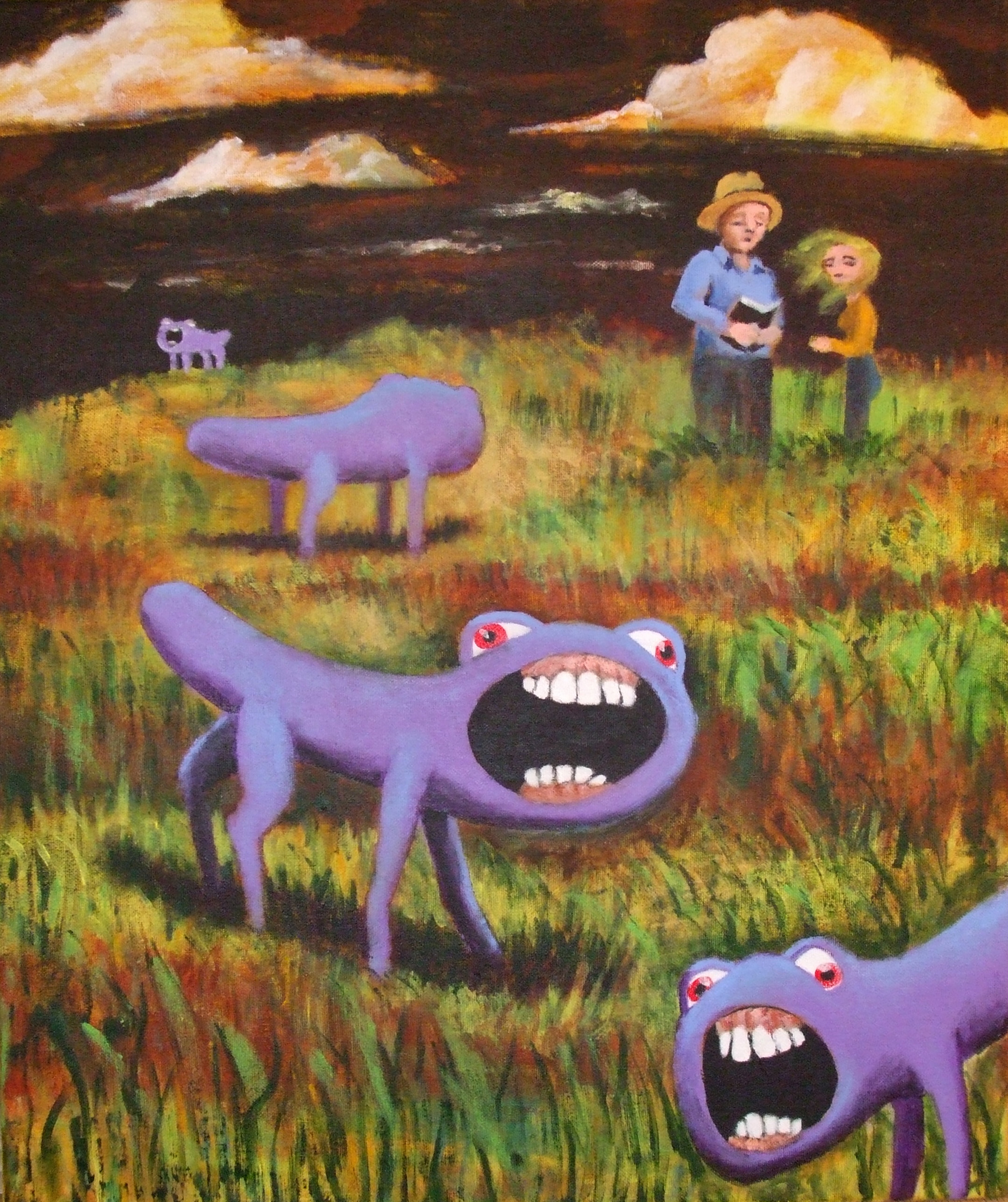
In a paper(1) published in Ecological Economics in 2020, William E. (Bill) Rees argues that the human enterprise —Modern Techno-Industrial (MTI) Society— is in potentially disastrous ‘overshoot’, exploiting the ecosphere beyond ecosystems’ regenerative capacity and filling natural waste sinks to overflowing, the plague phase of a global population cycle.
Some species in simple ecosystems exhibit regular cycles of outbreak followed by collapse in which the outbreak is referred to as the ‘plague phase’ of the cycle. The plague continues until negative feedback—food shortages, disease, predation, etc., depending on species and circumstances—knocks the population back.
Five years ago in this blog I asked the question “What’s like to be a plague?” because that question is critical to understand whether there is a possibility to avoid the collapse or not. In another paper(2) published this August, Bill Rees indirectly explores that question. Growth will cease, either by “design or disaster.”
It is becoming increasingly evident that a quantitatively equivalent energy transition from FFs to so-called green electricity sources on a climate/overshoot friendly schedule is not likely to occur.
Developing another assured supply of abundant cheap energy would simply allow for the extension of growth-based ‘business as-usual-by-alternative-means’, increasing the depletion/dissipation of the natural world and worsening overshoot:
The prospect of societal collapse, however horrific it sounds to MTI ears, is perfectly
consistent with history and the systems dynamics characterizing the rise and fall of previous human civilizations. In particular, many MTI nations are exhibiting the diminishing returns and socio-political pathologies—egregious and increasing inequality, government and institutional incompetence and corruption, currency debasement, popular loss of confidence in the state, increasing civil unrest, etc.—of an overly complex society on the verge of collapse.
Bill Rees considers industrial Homo sapiens to be trapped in an evolutionarily-determined inability to comprehend what’s really going on in the species’ relationship with Earth – meaning we are too stupid by nature to figure a way out of the dynamic nonlinear feedback loops driving the world problematique.
We have reached important milestones as species. Some of us are very intelligent as individuals, for the time being more than machines. And right now, there are very intelligent people on both sides of the ecological and sustainability debate. However our collective intelligence has not yet reached the point of making the species aware of what’s coming, and therefore not intelligent enough to have a species action plan.
In other words, the plague is not self-conscious… yet.
____________________
(1) Rees, William E. ‘Ecological Economics for Humanity’s Plague Phase’. Ecological Economics 169 (1 March 2020): 106519. https://doi.org/10.1016/j.ecolecon.2019.106519.
(2) Rees, William E. ‘The Human Ecology of Overshoot: Why a Major “Population Correction” Is Inevitable’. World 4, no. 3 (September 2023): 509–27. https://doi.org/10.3390/world4030032.
Feature Image. See previous post
 Mind the Post
I do not think I am a plague….
Seriously, all species are plagues, aren’t they? Humans were, are, and will always be a plague.
At least, they are genetically programmed to be. This does not mean the end of the world, nor even the end of the species.
Hi Jose, Perhaps all species are potentially a plague, but the vast majority barely survives, most keep stable populations for a while or fluctuate. I do not think they qualify as a plague. A plague is just an emergent explosive transient event. Of course, it does not mean the end of the world, if by world we understand the planet. And it won’t mean the end of the species. An Army ant or a locust swarm are plagues. They are transient and they extinguish themselves, but not the species for sure. The exponential growth of human population qualifies as a plague, and very likely, sooner or later, if we do not become “aware” that we are a plague and act in advance, we will experiment a similar breakdown in population. The human species will continue for sure…
There is no a moral valuation in my post (or appreciation), just a fact.
The word “plague” is very negative and this is the main reason of my objection. It seems it is becoming fashionable to consider that humankind is a sort of problem for the planet. This I find utterly stupid.
In any case, it is likely there will be a change on the population growth rate. This is unavoidable. Still, I think the major concern for the “Global civilizational collapse” is the nuclear catastrophe, rather than climate change, as suggested in the article. It seems to have been written by Savonarola’s successors. “Repent or you will die”, or rather: “you are already dead, because of your sins”
Muchos ya lo razonan pero son considerados tóxicos
[…] de cualquier otra entidad), mi propia visión de la posible evolución futura de nuestra especie es mucho más […]