- Multilateralism is in retreat
- Economic risks are intensifying
- Technological risks are growing, largely unchecked
- Societies are on the edge
- Environmental concerns are being deprioritized in the short term
- A new competitive order is emerging
These are the highlights of The Global Risks Report 2026 (GRR2026), the 21st edition of the annual report published by World Economic Forum.
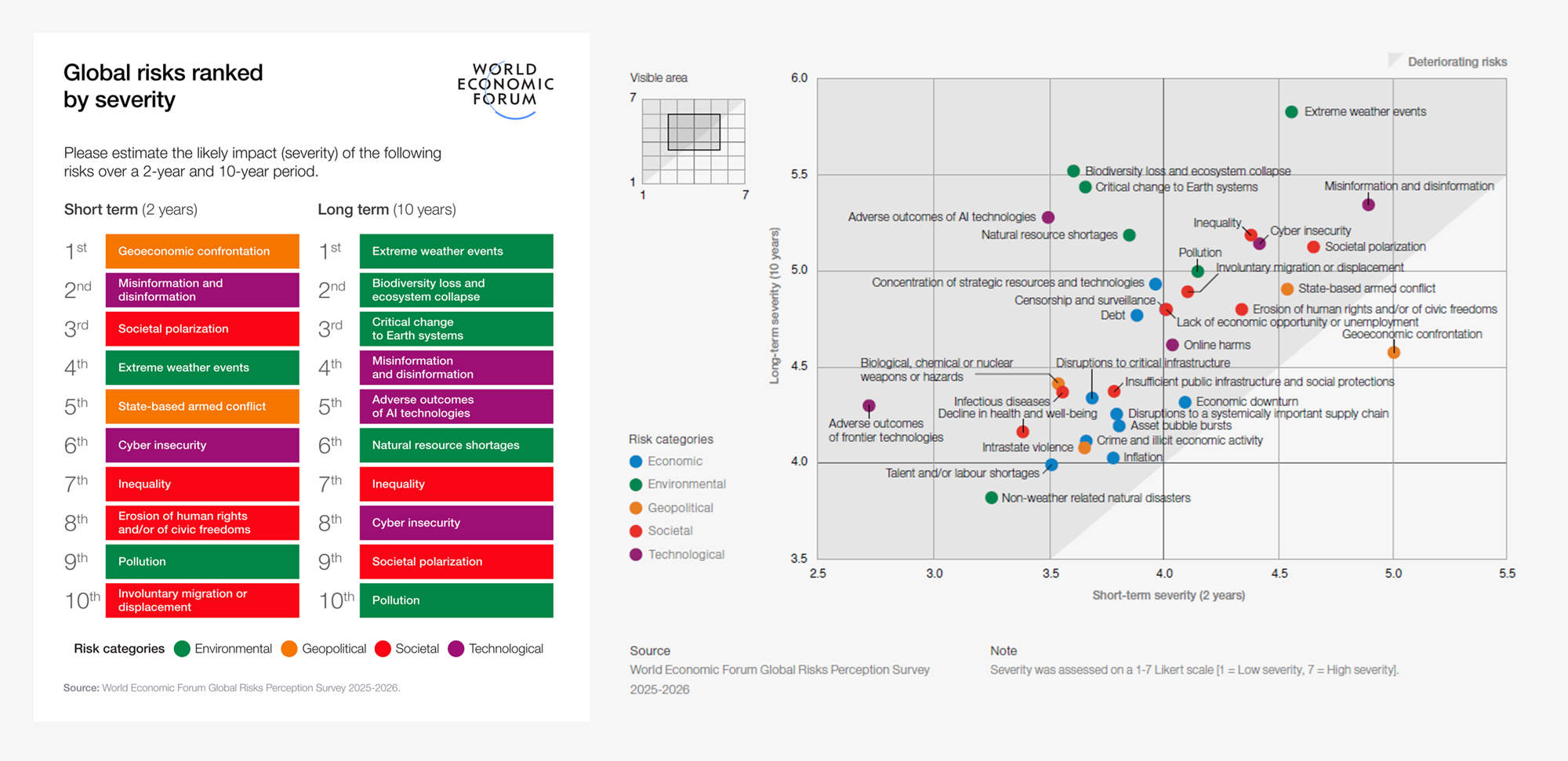
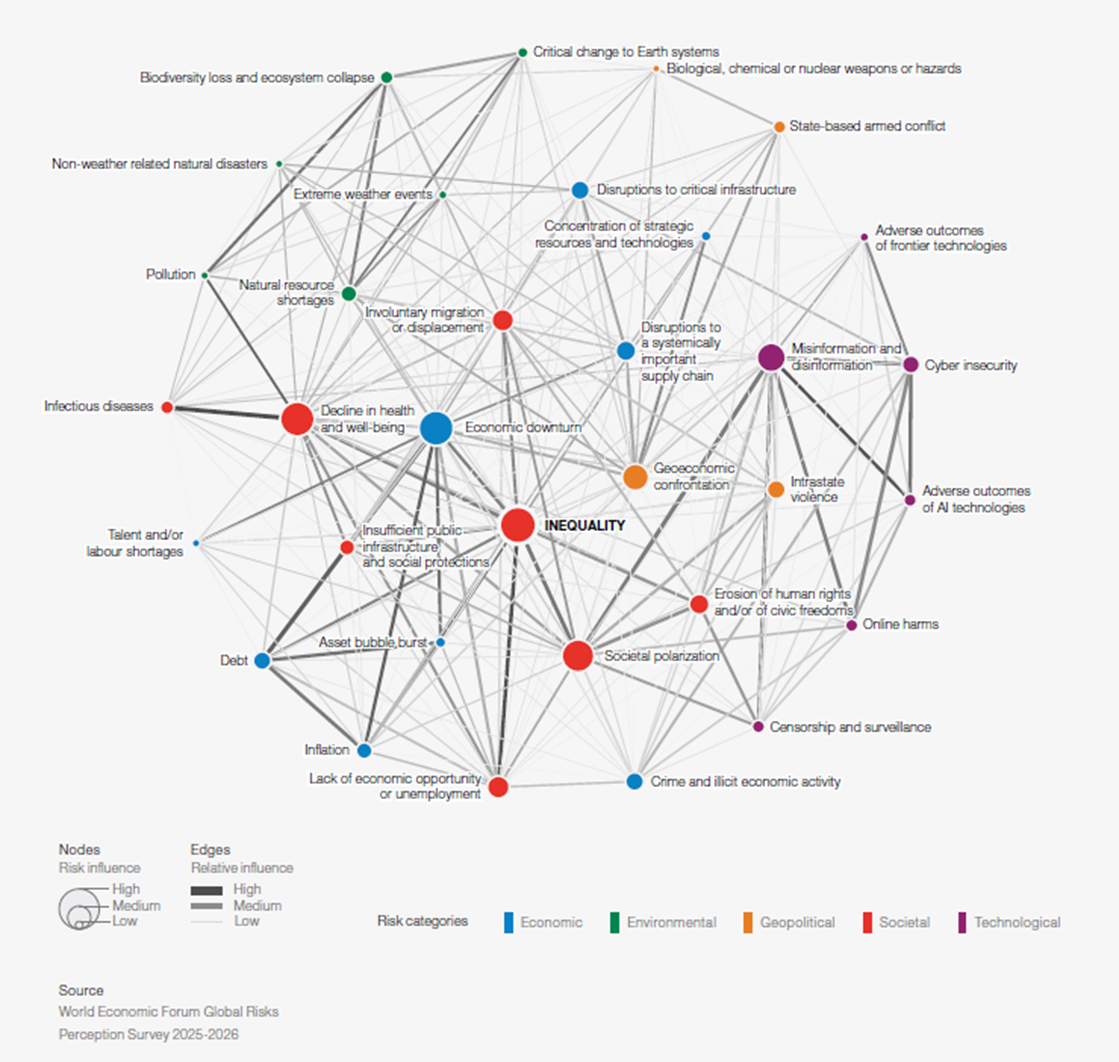
This is how risks perception has been changing over the past five years:
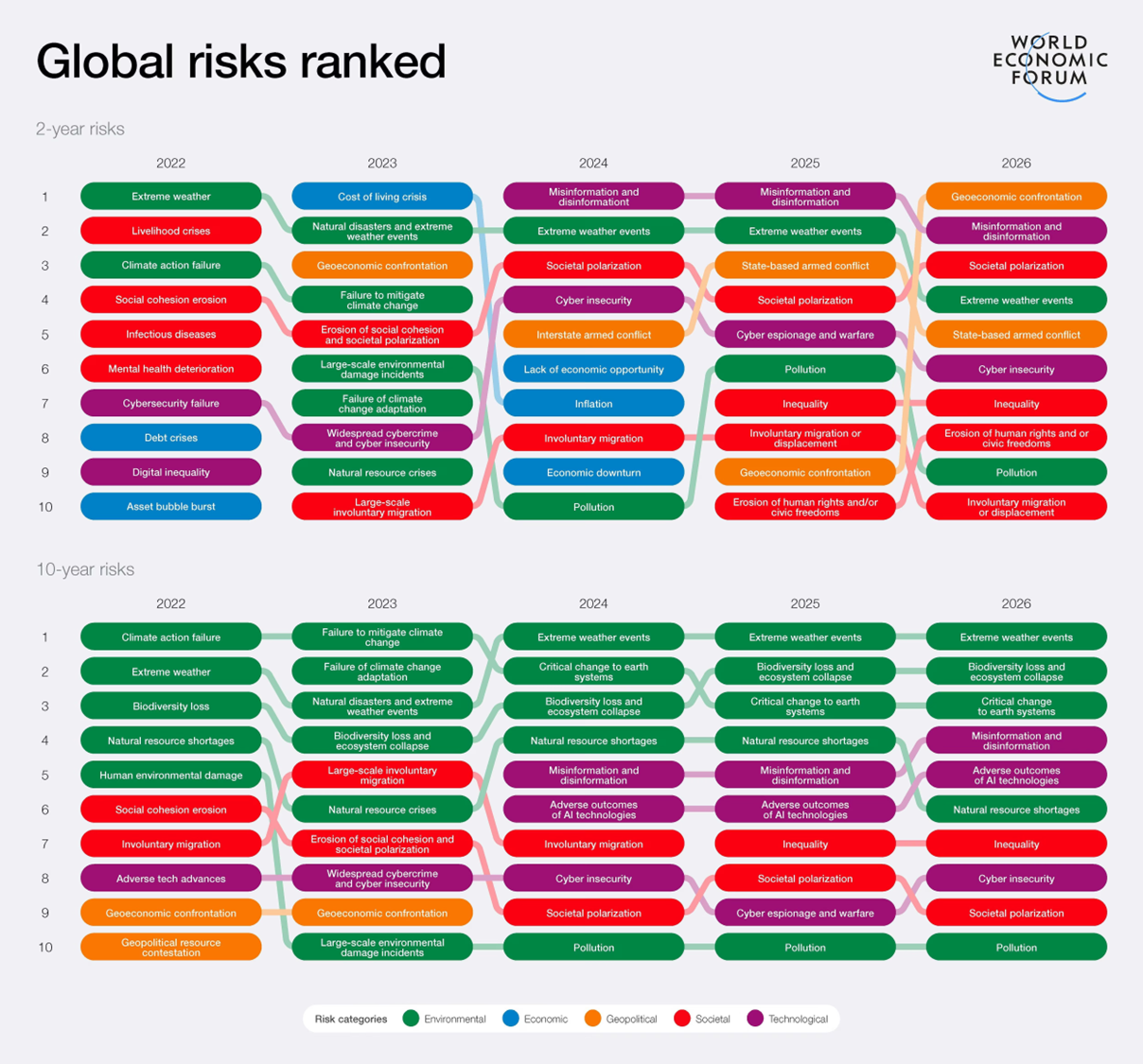
A darkening outlook. And what about the future?
- The world in 2026: on a precipice
- The path to 2028: compounding risks
- The path to 2036: over the edge?
A new competitive order is emerging In this period of geoeconomic transformation, alliances are being reshaped and the resilience of markets and of the institutions that emerged from the Bretton Woods Conference of 1944 is being tested. Protectionism, strategic industrial policy and active influence by governments over critical supply chains all signal a world growing more intensely competitive.
In this year’s [Global Risks Perception Survey], 68% of respondents describe the global political environment over the next 10 years as a “multipolar or fragmented order in which middle and great powers contest, set and enforce regional rules and norms”, an increase of four percentage points compared to last year (Figure 9).
Only 6% of respondents expect a reinvigoration of the previous unipolar, rules-based international order.
Yet, history reminds us that order can be rebuilt if nations choose strategic collaboration even amid competition.
Are nations choosing to collaborate? It seems it’s just the opposite.
The Nobel Prize Daron Acemoglou writes I’ve Studied How Democracies Fail. Here’s My Unified Theory of Trump:
With his barrage of executive orders and daily challenges to the judicial system feeding a nonstop White House news cycle, few people step back and wonder whether there’s a philosophy guiding President Donald Trump and his closest advisers.
Yet there is a theory of Trump, of sorts.
Most of the administration’s actions—the questionable crypto dealings, the appointment of unqualified allies to high-level positions, the unconstitutional deportations and National Guard deployments, the ouster of a Latin American head of state—have a logic. They’re all attempts to expand executive power, steps toward a type of imperial presidency.
Though perhaps the problem is just pessimism…

 Mind the Post