A new and intense wave of protests in Iran began on December 28, 2025, initially sparked by severe economic hardship, skyrocketing inflation (around 42% in December), currency collapse, and rising prices for food and essentials. It quickly spread nationwide, evolving into widespread anti-government demonstrations—the largest since the 2022 Mahsa Amini (“Woman, Life, Freedom”) protests.
Coverage by major western and international outlets has been strikingly limited and cautious during the first few days, but it seems that finally you can get a glimpse of what’s happening there.
Last minute info, January 11, 2026
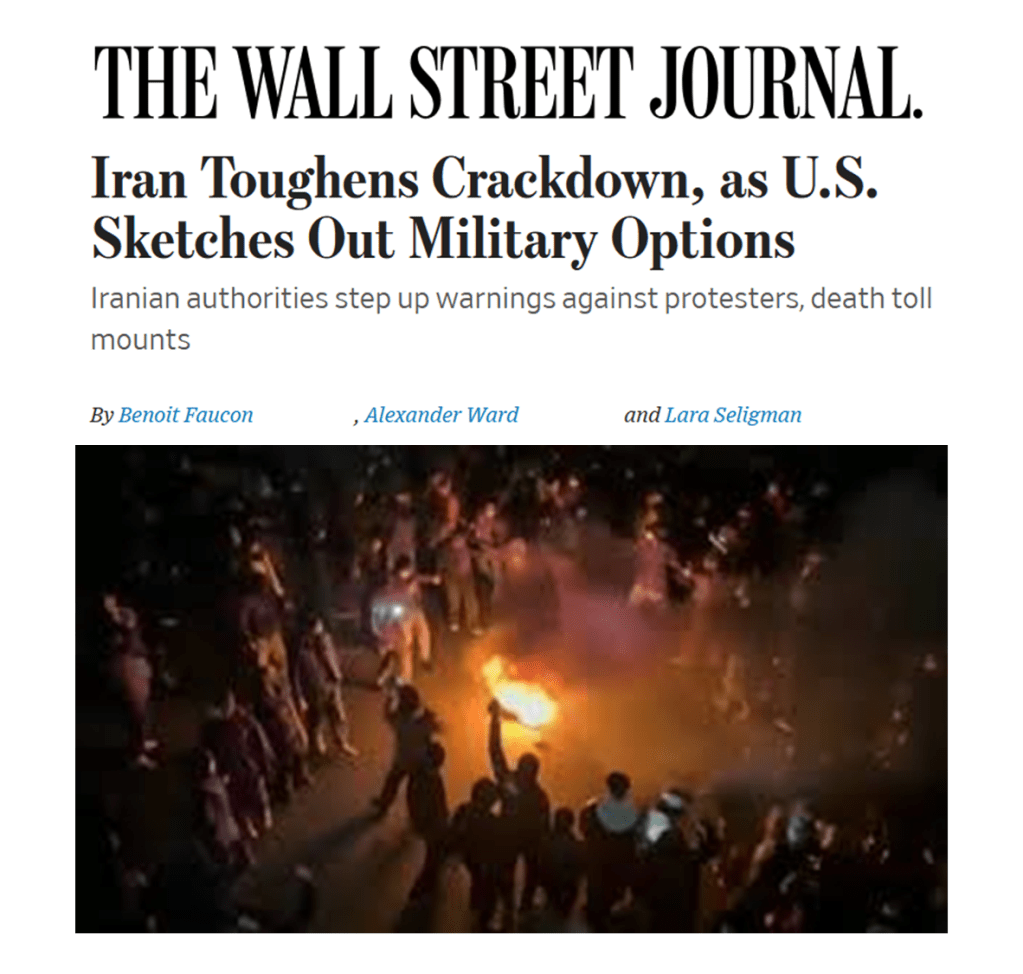
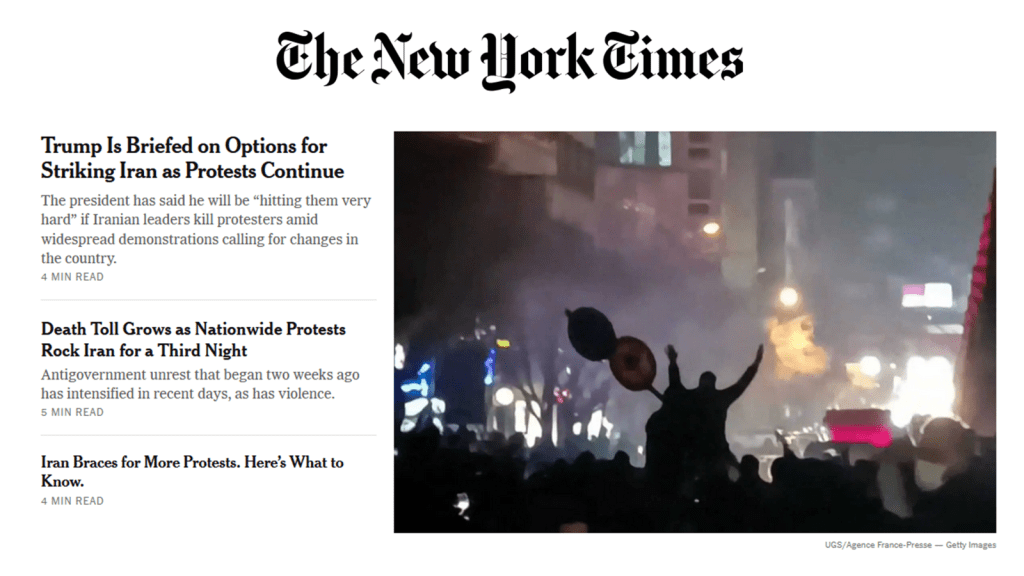
Iran Toughens Crackdown, as U.S. Sketches Out Military Options. Iranian authorities step up warnings against protesters, death toll mounts, WSJ
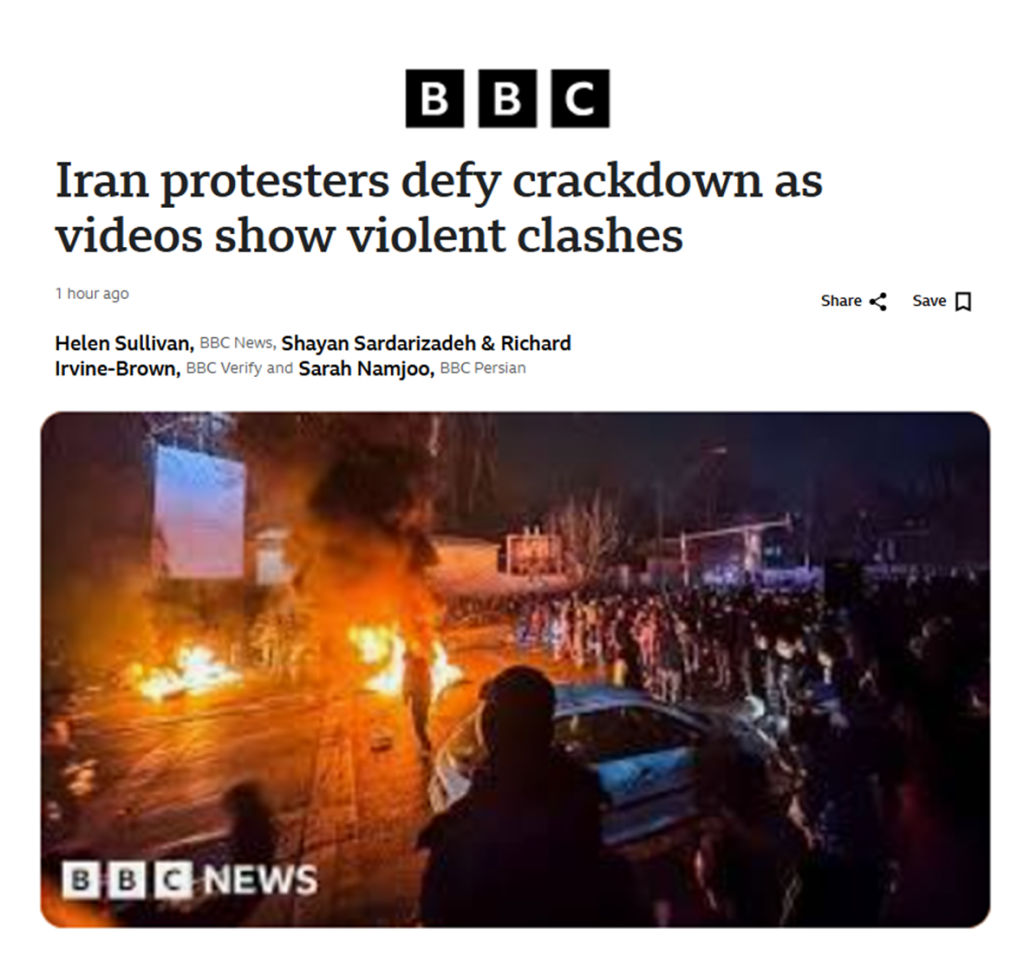
Iran protesters defy crackdown as videos show violent clashes. Iran has warned it will retaliate if attacked by the US, as protesters defied a deadly government crackdown on Saturday night. BBC
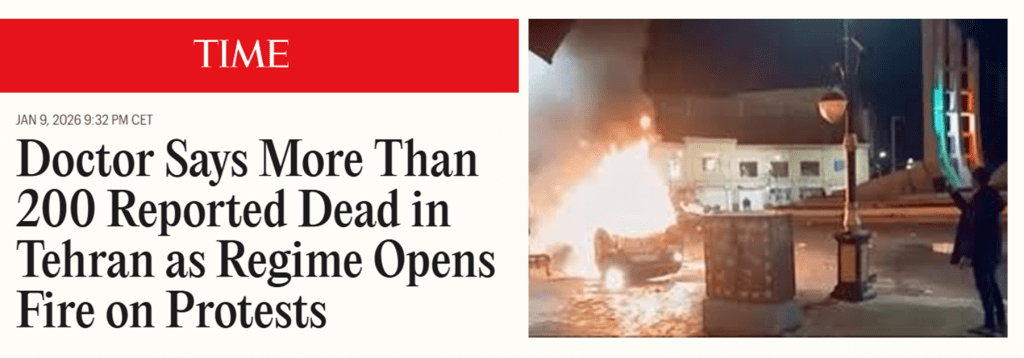
Doctor Says More Than 200 Reported Dead in Tehran as Regime Opens Fire on Protests. A Tehran doctor told TIME on condition of anonymity that just six hospitals in the capital had recorded at least 217 protester deaths, “most by live ammunition.” TIME
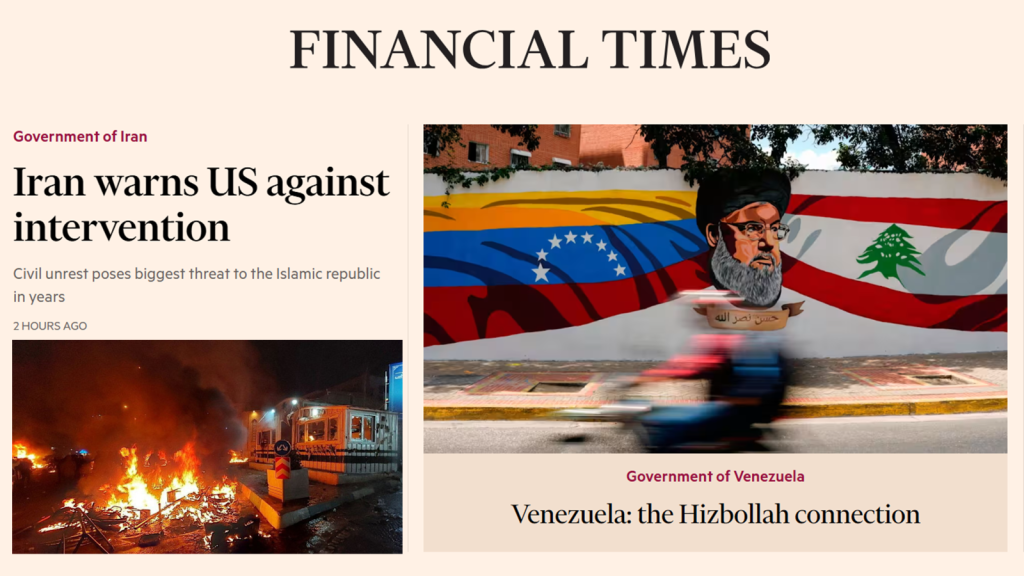
Iran warns US against intervention. Civil unrest poses biggest threat to the Islamic republic in years FT
Trump Is Briefed on Options for Striking Iran as Protests Continue. The president has said he will be “hitting them very hard” if Iranian leaders kill protesters amid widespread demonstrations calling for wholesale changes in the country. NYT
Now the question is: Is this time different in Iran? Protests are sweeping the country. Trump is threatening its leaders. But is the regime really in trouble?
Is the Iranian Regime About to Collapse?
Karim Sadjadpour and Jack A. Goldstone, writing for The Atlantic, argue that there are five conditions which determine whether revolutions succeed. For the first time since 1979, Iran meets nearly all of them:
History suggests that regimes collapse not from single failures but from a fatal confluence of stressors. One of us, Jack A. Goldstone has written at length about the five specific conditions necessary for a revolution to succeed: a fiscal crisis, divided elites, a diverse oppositional coalition, a convincing narrative of resistance, and a favorable international environment. This winter, for the first time since 1979, Iran checks nearly all five boxes.
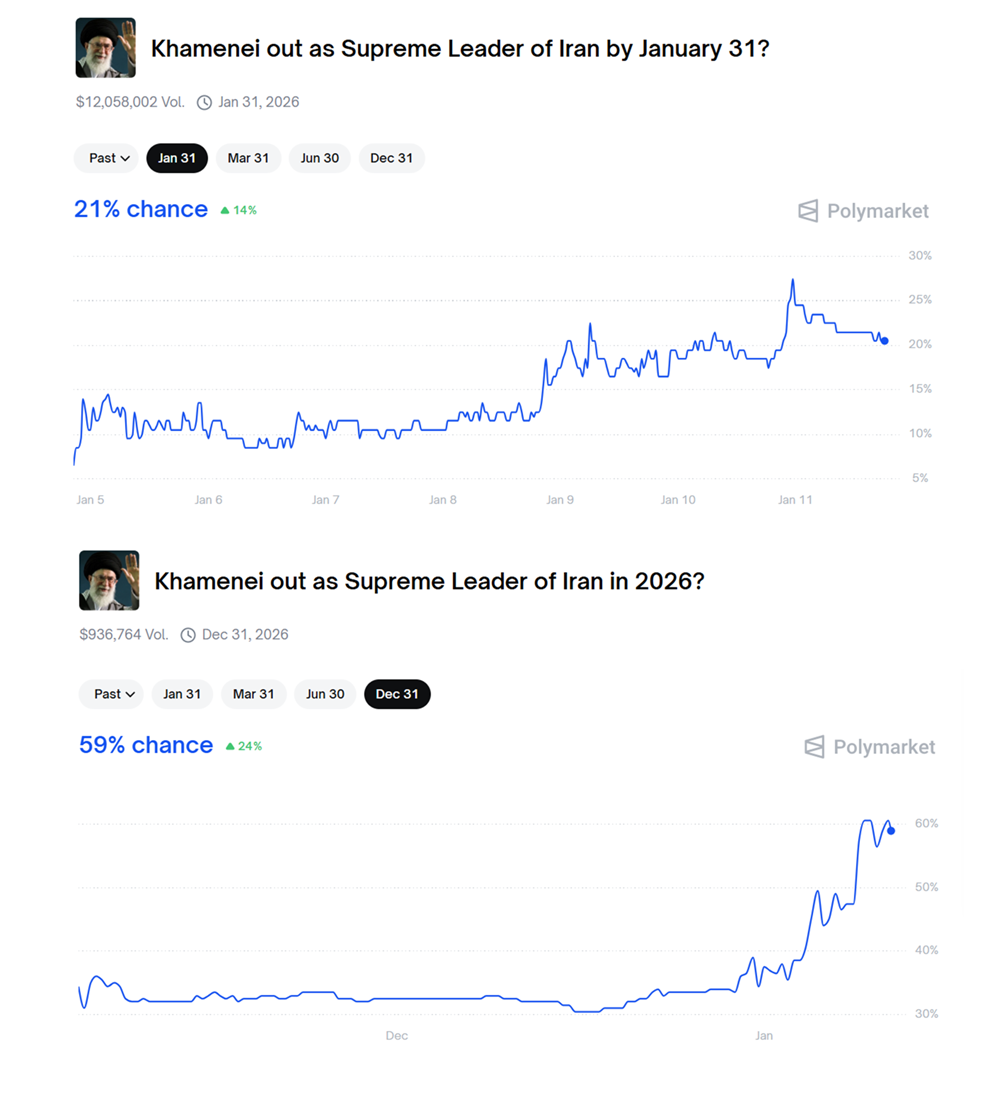
This is what Polymarket anticipates (right now, it will evolve):
And this is what a state of the art generative AI anticipates (in this case, I have choosen Grok for X reasons):
The regime is in “survival mode,” more vulnerable than in decades due to war fatigue (post-2025 conflicts with Israel), depleted resources, and demographic shifts (70% of Iranians under 35, many secular-leaning). However, its repressive apparatus (IRGC, Basij) remains cohesive, with no major defections yet reported, and the blackout effectively hides atrocities while disrupting protester organization.
Overall, I’d anticipate regime survival in weakened form (suppressing but bleeding legitimacy), unless US intervention catalyzes a 1979-style implosion. The Iranian people deserve better than this corrupt, medieval theocracy—prioritizing proxy wars over bread—but change won’t be tidy or bloodless. If protests sustain through February, odds shift toward transformation.
The future of revolutions
In the reference linked on The Atlantic article quoted above, one of Oxford University Press’ very short introductions, in this case to Revolutions1, Jack Goldstone concludes with a brief chapter on the future of revolutions.
Let me close this post with his moving reflection (food for thought, my emphasis):
What is the likely future of revolutions? They will continue to occur where regimes exhibit the five conditions that lead to state breakdown (…)
A further lesson from history is that we should not expect most revolutions to suddenly create stable democracies. Revolutions create new dilemmas and unleash new struggles for power. Most revolutions, including even the American Revolution of 1776, went through more than one constitution, discriminated against minorities, and veered toward weak government or back toward authoritarian tendencies before achieving steady progress toward democracy.
Someday, all countries in the world will have stable, resilient, inclusive, and just regimes. At that point, perhaps revolutions will fade into history with other heroic tales of wars and the creation of states and peoples. But we are a long way from that day. Indeed, in recent years, the number and quality of democracies in the world has been declining. So we will continue to see people mobilizing to overturn their governments in pursuit of social justice and creating new political institutions.
If the trends of the last thirty years continue, they will increasingly do so by nonviolent resistance and avoid the terrors of radical revolutions that prize ideological purity over human life. We can then hope that in the future the heroism of revolutions will predominate, while the horrors will more often be avoided. Yet it will likely take more wisdom, and more cooperation among people of different faiths and races, than we have today to reach that goal.
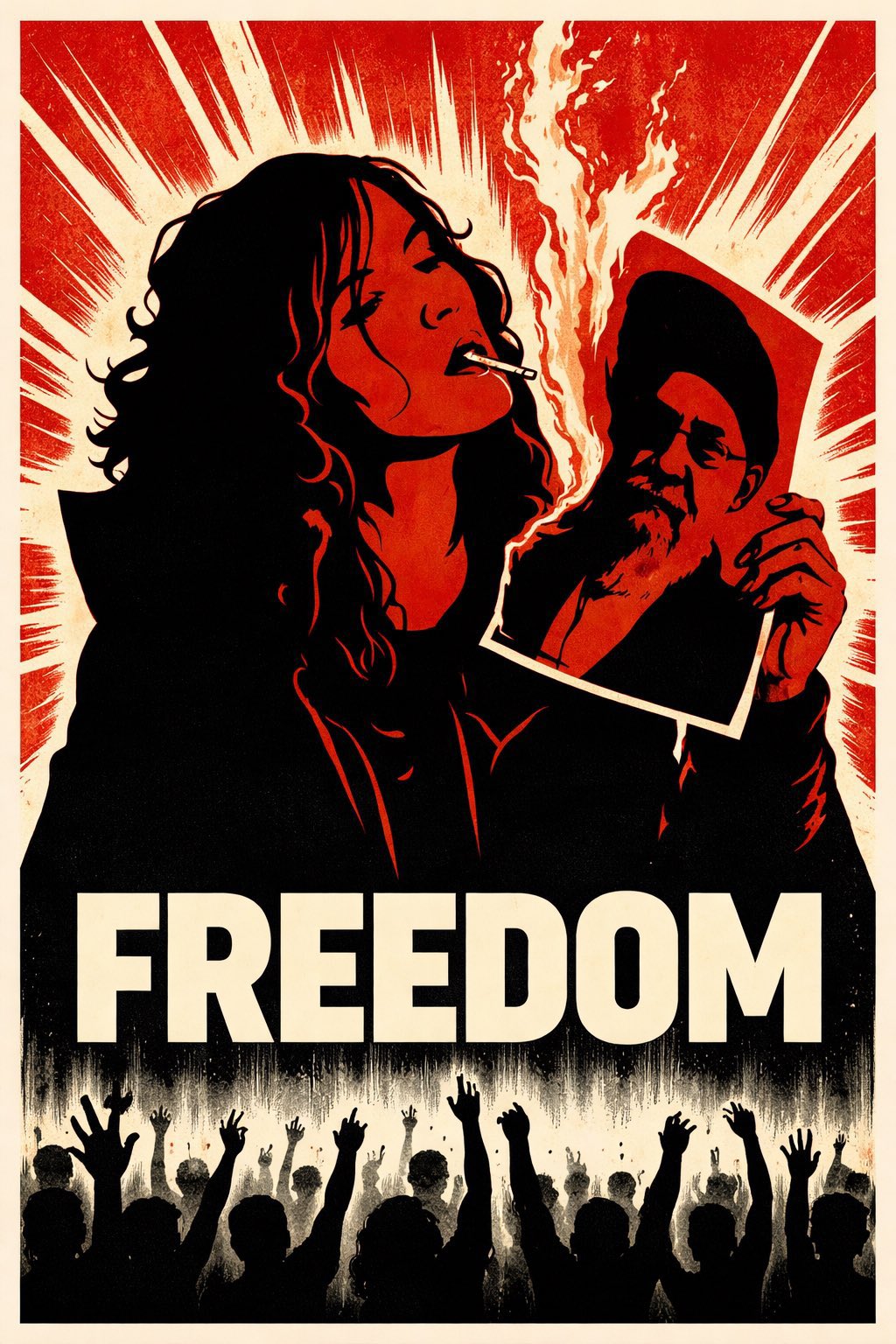
Every revolution has a symbol. Let me pick this one:
____________________
(1) Goldstone, Jack A. Revolutions: A Very Short Introduction. Oxford University Press, 2023. https://bookshop.org/p/books/revolutions-a-very-short-introduction-jack-a-goldstone/8fee51bfcadd5e80
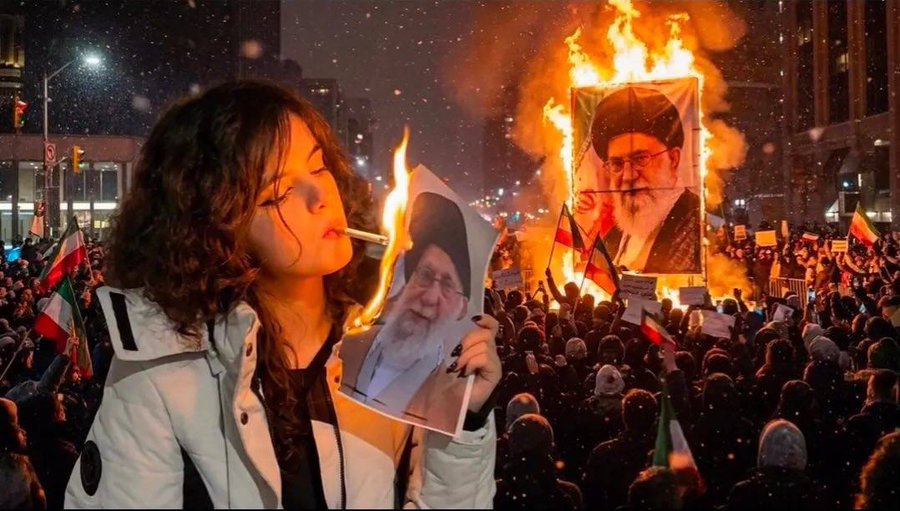
Featured Image: Impossible to locate the original source. It’s all over the place. The inspiration? This image / video. The narrative? All yours!
 Mind the Post