
What do futurists believe, and how do their views differ from the typical global citizen? This is the question that Ipsos explore in collaboration with the Global Futures Society.
They asked a group of about 120 futurists the same questions posed to more than 52,000 people in 50 markets worldwide in Ipsos Global Trends study. They added some open-ended questions zooming in on three key themes:
- The rapid development of technology, especially AI
- Climate change/sustainability
- Geopolitical instability/shifts
It’s important to understand the areas of disconnect between those shaping the future, those thinking about the future, and those who will be impacted by the future.
Main findings:
- Futurists are not, by nature, hedonists or nihilists: They are drawn to the profession from a wide range of backgrounds. Some have formal training, some don’t. But there are shared values among futurists.
- Futurists are happier and more optimistic than the general population, until it comes to the future of the world as a whole, where they are more pessimistic. Few futurists have much faith that business or government leaders are good at foresight.
- Futurists think they are better at planning than anyone else is
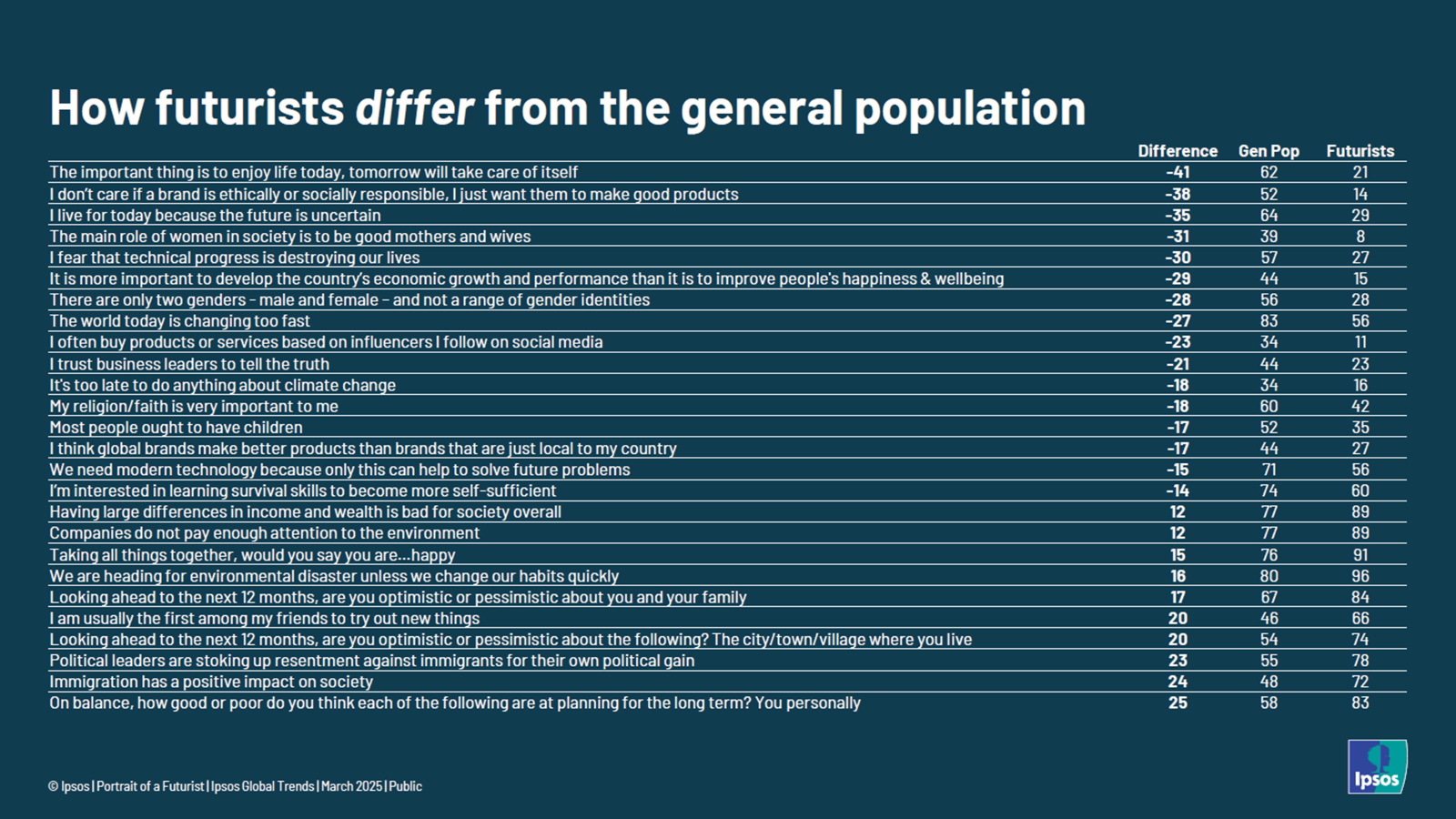
- Only 27% of futurists think that “technical progress is destroying our lives” vs. 57% of the global population. Futurists are less likely to think we need tech to solve our problems, but also less likely to think it’s destroying our lives.
- 96% of futurists believe “we are heading for environmental disaster unless we change our habits quickly” vs. 80% of the global population. They think companies aren’t doing enough, but they are also optimistic. We can still fix it
- Only 56% of futurists think “the world today is changing too fast” vs. 83% of the global population. Futurists are overwhelmed, but don’t want to slow change
- Futurists are more interested in innovation, but less interested in survivalism
- Futurists take a more expansive view on gender roles, but less likely to believe that people should have children.
- Futurists believe immigration is good for society, but also divisive
- Futurists are less religious but still traditionalists
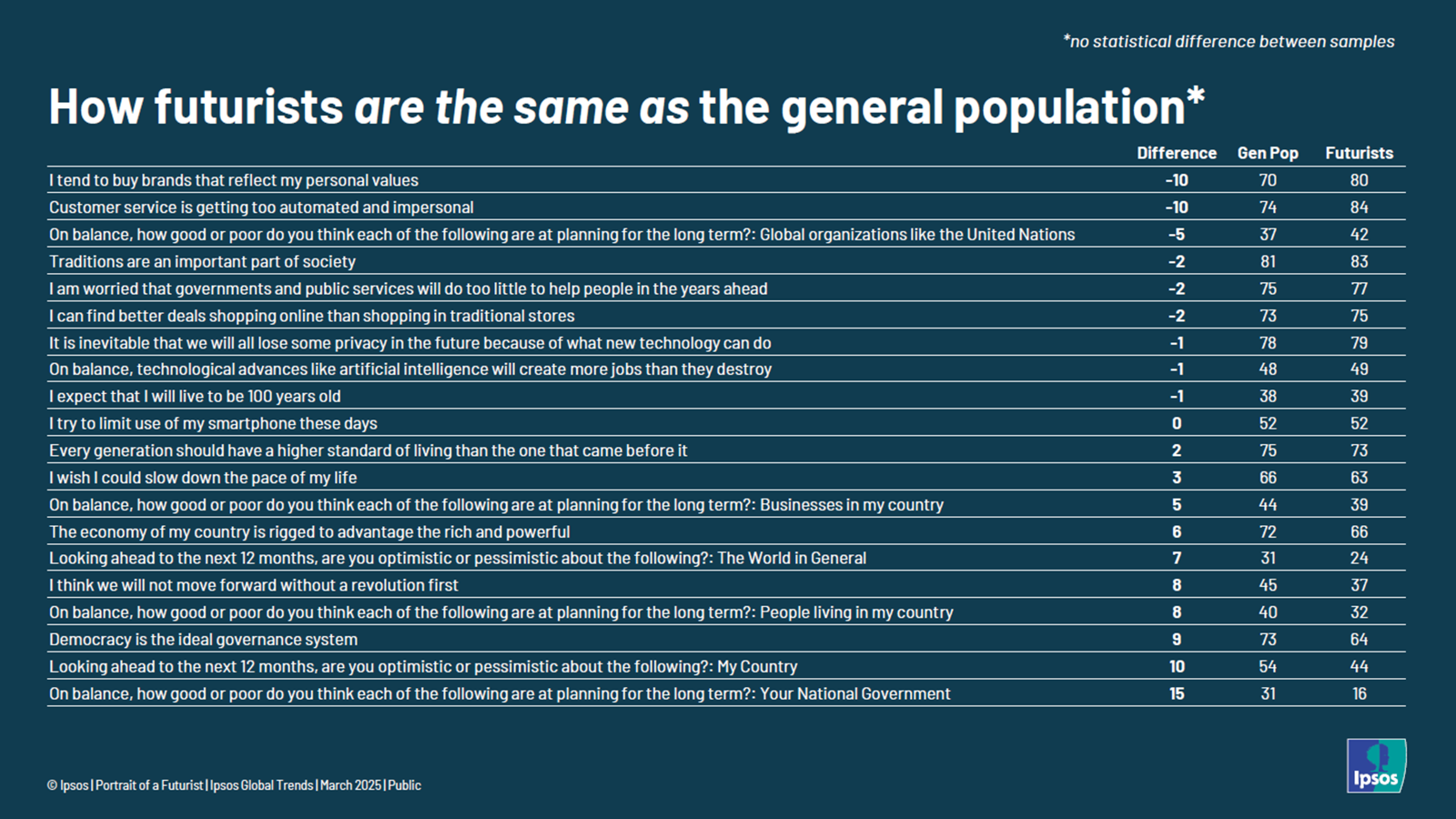
- Futurists agree every generation should improve its standard of living and government won’t do enoug to help
- Futurists want brands to reflect their values but are wary of businesses
____________________
Featured Image: Cyclist, by Natalia Goncharova, 1913
 Mind the Post