
Leopoldo Lopez is a Venezuelan democratic leader, former mayor of Chacao in Caracas and a global advocate for democracy. After leading non-violent protests against the Maduro regime, he was arrested in 2014 on 18 February 2014 and charged with arson and conspiracy. López spent seven years as a political prisoner before making a daring escape in 2020.
López was released from house arrest on the morning of 30 April during the 2019 Venezuela uprising, with the assistance of defecting armed forces supportive of Juan Guaidó. López and his immediate family entered the Chilean Embassy in Caracas, but moved to the Spanish Embassy in the early hours of 1 May 2019.
On 24 October 2020, top Venezuelan opposition officials said López had fled Venezuela. López, who is a political mentor to opposition leader Juan Guaidó, had taken refuge in the Spanish ambassador’s residence in Caracas.
Today, as founder of the World Liberty Congress, he unites activists worldwide in the fight against autocracies, championing the cause of freedom across borders. He is also a global fellow at the Wilson Center.
In a report1 published by the Wilson Center in July 2023, Leopoldo argues that “the cooperation of nations like Venezuela, Iran, Russia, Cuba, China, Belarus, Zimbabwe, and others should be recognized as an interest-based, transnational attempt to undermine democracy and make the
world safer for authoritarianism.
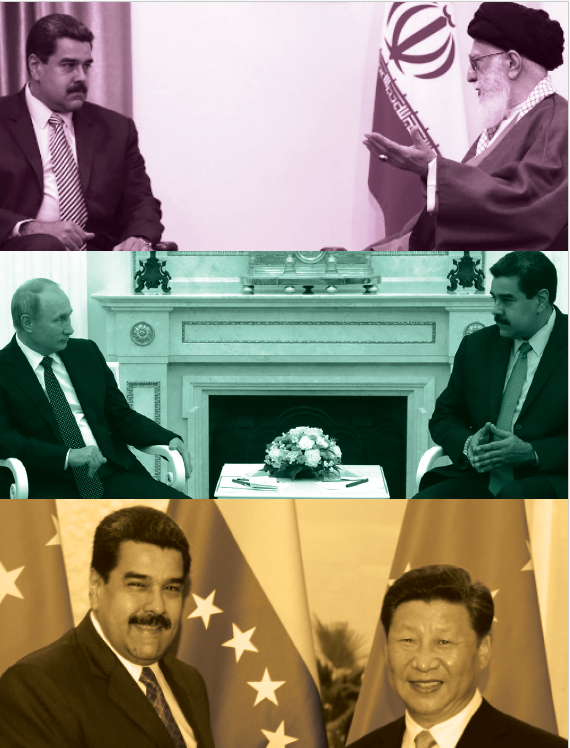
López details the tactics employed by this “autocratic network” to strengthen dictatorships and repress pro-democracy movements, including military cooperation, the spread of technology for surveillance and censorship, support for sanctions evasion, and the transnational harassment of dissidents.
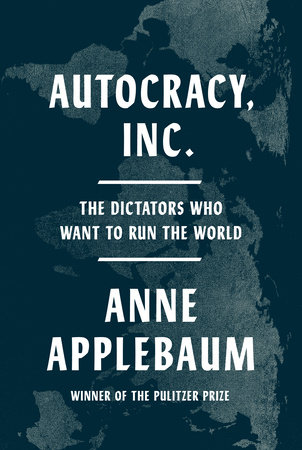
This is exactly the autocratic network described by Anne Applebaum in her recent book “Autocracy, Inc.: The Dictators Who Want to Run the World.“
Drawing on his experience as an opposition leader and political prisoner, and conversations with pro-democracy activists worldwide, López argues that the international response to the “autocratic network” must involve greater cooperation among pro-democracy movements worldwide and far more robust international support.
Leopoldo Lopez was one of the speakers at TEDNext 2024, October 24, 2024, at Pullman Yards in Atlanta, Georgia. In a rousing call to defend democracy worldwide, he tracks the rise of autocracy over the last decade, shares his own story of imprisonment and exile and discusses the vision behind the World Liberty Congress, an alliance of leaders from 56 autocratic countries aimed at organizing a united front against authoritarianism.
15:44 > The case of Venezuela has been an electoral autocracy. So we’ve gone to elections for years. And we’ve been developing the ways in which we can now exactly the results. On July 28, there was an election, we had a candidate, Maria Corina Machado, she was disqualified the same way I was disqualified years ago. So we had another candidate, Edmundo González. He was unknown three months before the election, but he became known by everybody. And on the 28th of July, he won with 70 percent of the vote. The decision of Maduro was to steal the election. But we were able to prove with elements of every single voting machine, that we actually won. Maduro decided to have a repression all over the country. We went to the election with 300 political prisoners. Now there are maybe 2,500 political prisoners. I wake up every day to get a message from someone from my movement who has been taken to prison, That’s the situation now. But I can assure you that we will be free. Because one thing is to think that you are a majority, and a very different one is to know. Everybody knows that we are a huge majority, and that will not be sustainable for Maduro because we will never surrender. And we will be free.
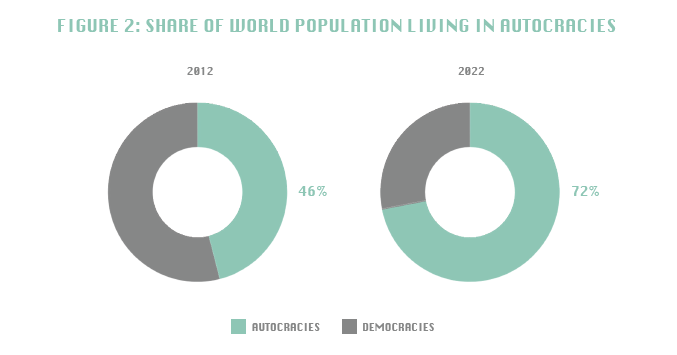
Seventy-two percent of the world’s population lives under some sort of similar autocratic rule. López believes that if the present trend continues, maybe in the next 25 years, in 2050, the entire world would be autocratic. That is less than a generation ago. So we must take action.
What can we do?

09:16 > I believe that we are now at a moment where we need to make a tipping point of the engagement of people around the world to create a movement towards freedom and democracy
10:43 >
- the first thing I believe is to assume that we need to take the offensive. Stop legitimizing autocrats. Autocrats today are comfortable. They do business with governments, with businesses. We need to think of smart sanctions, of ways to make them accountable for the violations of human rights.
- Second, there needs to be a support for pro-democracy and freedom movements. In the United States, that is the most actively philanthropic society in the world, only two percent of philanthropy goes to democracy-related issues. Only two percent. And a fraction of a fraction of that two percent goes to promote democracy outside the US. It’s not a priority. So supporting pro-democracy movements, supporting the people that want to be free, should be a priority for all. And I mean, let me give you some examples. Technology. Access to internet, to free and uncensored internet. Think of the potential transformational capacity to give people all over the world access to internet. Let me give you another example. Using new technologies like Bitcoin to promote and support the potential of these movements. We are doing this already. In the case of Venezuela, we supported more than 80,000 medical doctors and nurses using Stablecoins and Bitcoins because under autocracies you are under a financial apartheid. Give opportunities for training. Give opportunities for these movements to be part of a global conversation.
- And finally, we need to build a global movement. There is not one person, one organization, one government, that can do this by themselves. Similar to climate change. We need to think of this challenge as a network. We need to create nodes of network, nodes of network that activate all over the place. We need to activate anyone with the things that they can do. Musicians should think about singing for freedom. Artists, intellectuals, researchers, activists, governments. Everybody can create their own node with a similar goal, which is freedom and democracy.
Leo, you’re an icon. Thank you!
____________________
(1) Leopoldo Lopez, ‘Challenging Autocracy From the Front Lines’, 2023, https://www.wilsoncenter.org/publication/challenging-autocracy-front-lines
Featured Image: Leopoldo López 2020, EFE
 Mind the Post