Human beings have found space valuable since a long time agoat, at least as a source of intrigue. However, it’s only since the 1960s that people have been up there, doing things. Today everyday space tourism, space mining and more are just around the corner, and there is one topic in urgent need of such treatment: property rights.
Rebecca Lowe has written about this question before, but here is a #mindthepost cherry-pick from her recently published article1, in which she focuses on ‘space activity’ and its value:
How should these activities be regulated? Questions arise about the assignment of legal property rights, about fair and productive approaches to taxation, and, at a meta-level, about who should govern what.
space activity is currently governed by international law, which is ill-equipped to deal with certain developments of the space economy. (…) states remain, and are predicted to remain, the biggest space players, but commercial actors are playing an ever-growing role
there’s a short time left for humanity to collectively institute an effective and morally justified system for assigning legal property rights in space, if we want to avoid the standard problems of an informal first-come-first-served system, which could see the most valuable space opportunities permanently monopolised by billionaires and autocrats.
One alternative approach, I’ve argued, would be to establish a framework to enable individuals and groups to acquire time-limited conditional legal property rights to plots of spaceland, on a Georgist-inspired market system.
Georgism is not a new idea, but unlike its peer Marxism, it is one of those (deliberately?) neglected ideas, with plenty of “space” for exploration…
____________________
(1) Rebecca Lowe, ‘The Value of Space Activity’, Economic Affairs 44, no. 3 (2024): 561–71, https://doi.org/10.1111/ecaf.12676.
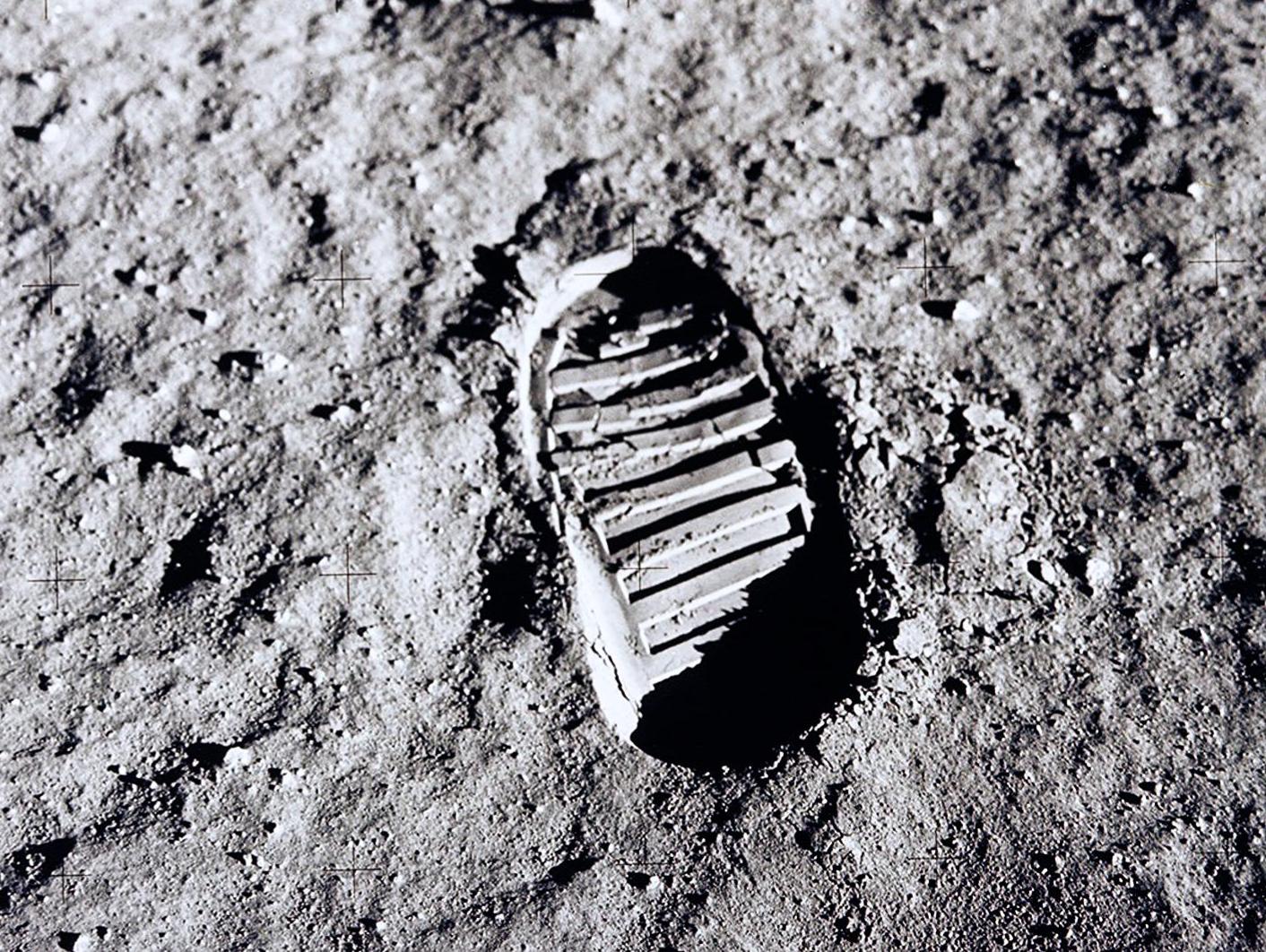
Featured Image: Apollo 11 Bootprint, NASA
 Mind the Post