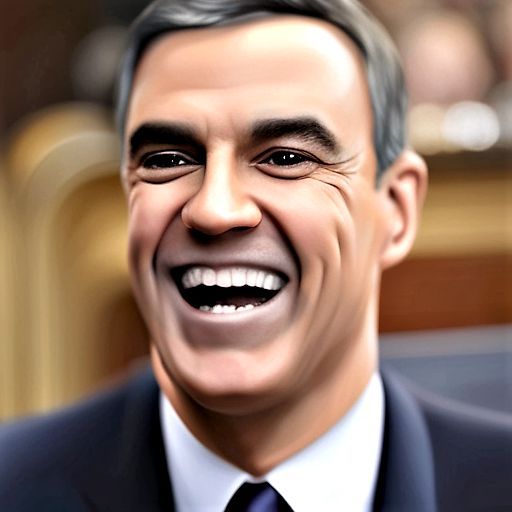
There is a new monster in town.
Although we usually think of monsters as fictional characters in fantasy stories, they are actually an effective way to show and signal threats or just a warning on new phenomena that we do not fully understand. Mind the Post is not a blog about fantasy but monsters do appear once and again when dealing with complex issues and they belong to the imagery and the artwork in this site.
The etymology of monstrosity suggests the complex roles that monsters play within society. ‘Monster’ probably derives from the Latin, monstrare, meaning ‘to demonstrate’, and monere, ‘to warn’. Monsters, in essence, are demonstrative.
What is a monster? University of Cambridge

To report on the new monster in town is particularly painful, because it is a monster born in my country which is gravely damaging country’s convivencia. He is one of those personalities sharply characterized by Spanish well known writer Javier Cercas in Anatomía de un instante (The Anatomy of a Moment) as power hungry, and he is also a perfect example of the new kind of monster thriving on populism and what, imho, is a rising wave of autocrats, autocracies and people happily supporting authoritarianism.
That he is a monster (in fact, a killer)1 is explained here (jockingly) by another famous Spanish writer, Perez Reverte:
International media are carefully watching:
POLITICO: The Spanish dog has his day: How ‘Perro’ Sánchez won
Spain’s leader was written off when he gambled on a snap election. A canine insult and a canny deal turned his fortunes around.
For years, conservative critics of Spanish Prime Minister Pedro Sánchez contemptuously referred to him as Perro Sanxe — a deliberate mispronunciation of his name that translates as “Sánchez the dog.”
But rather than fight back, the canny politician chose to embrace his derogatory nickname.
The Spanish dog has his day: How ‘Perro’ Sánchez won
LE MONDE: Pedro Sanchez’s risky gamble
The Spanish socialist was reelected as prime minister by MPs, at the cost of an amnesty promised to the organizers of the disputed 2017 independence referendum. With this pact, he risks losing what political credit he has left.
There is always a political cost to staying in power without a clear majority. The one paid by Spain’s prime minister, the socialist Pedro Sanchez, to keep his job, is likely to be exorbitant.
By making a pact with a party that has always advocated radicalism, and which has been denounced by Sanchez himself as an unreliable partner, the prime minister risks losing any remaining political credibility.
Pedro Sanchez’s risky gamble
Added to this potential instability is the heightened risk of dividing the country.

THE GUARDIAN: The Observer view on Pedro Sánchez’s election deal to take power: it undermines democracy
In short, Sánchez’s amnesty has all the hallmarks of a bad deal, reached in bad faith, secured at too high a cost and unlikely to stick for long. Is this unpopular, legally dubious, unsustainable manoeuvre justified by the need to prevent the return to power of the far right for the first time since the Franco era? Barely. There is a clear danger that it will undermine faith in democracy, increase public distrust, fuel instability and encourage extremists to resort to extra-parliamentary methods.
The Observer view on Pedro Sánchez’s election deal to take power: it undermines democracy
WALL STREET JOURNAL: Spain’s Prime Minister Toys With Separatism
Pedro Sánchez strikes a deal with Catalans to stay in power.
Remember last summer when everyone was afraid that a far-right party could perform well in a Spanish election and endanger Spain and the European Union? Well it’s starting to look like the alternative was worse, after Prime Minister Pedro Sánchez on Thursday struck a deal with regional separatists to stay in power.
The separatists exacted a heavy price for their support. The centerpiece is an amnesty for everyone involved in an illegal 2017 Catalan independence referendum. The amnesty may also include those accused of illegal separatist activities before and since—a list that could far exceed 1,000 people.
The prospect that such a deal was in the works has become divisive in Spain, which has a long history of regional separatism and where national unity is a potent political issue.
Spain’s Prime Minister Toys With Separatism
It’s also creating problems for the EU. Many European countries face internal divisions and separatist movements, which Brussels is anxious to help national governments tamp down.
THE ECONOMIST: Spain’s prime minister secures his job, at a high cost
An amnesty for separatists may calm some Catalans, but it infuriates other Spaniards
Mr Sánchez had insisted before the election that any amnesty would be unconstitutional, a view shared by many other Socialists, including Felipe González, modern Spain’s longest-serving prime minister (1982-1996). Mr Sánchez refused to use the word for weeks while negotiating. When he finally broke the taboo, he presented it as a high-minded opportunity to turn the page on the Catalan conflict.
The way Mr Sánchez has repeatedly trampled through red lines and gone back on categorical promises has gravely damaged the country’s convivencia, peaceful coexistence between people of different places and politics. But Mr Sánchez not only has a grip on his party that prevented anti-amnesty voices from prevailing; he has also populated other parts of the state with allies. This includes the constitutional court that will scrutinise the amnesty, and which now has a left-leaning majority. Mr Sánchez’s opponents seem to take it for granted that the court will wave the amnesty through. The PP controls the Senate but it can only delay, not block, the law.
Spain’s prime minister secures his job, at a high cost

NEW YORK TIMES: Deal Granting Amnesty to Separatists Sets Off Turmoil in Spain
Prime Minister Pedro Sánchez’s agreement with Catalan separatists will likely keep him in power, but it has provoked an upheaval.
Deal Granting Amnesty to Separatists Sets Off Turmoil in Spain
FINANTIAL TIMES: An amnesty for Catalan secessionists is a gamble worth taking
Financial Times · by The editorial board · November 6, 2023
It is six years since secessionist politicians tore Catalonia apart with an illegal referendum and unilateral declaration of independence. Their failed bid for self-rule and the nationalist backlash it unleashed across Spain continue to roil Spanish politics, polarising the electorate and making stable government hard to come by. In a parliamentary election in July — the country’s fourth in seven years — the centre-right People’s party came out on top but lacked allies for a majority even with the support of the far-right party Vox. It has thus fallen to Pedro Sánchez, the socialist leader and prime minister since 2018, to try to assemble a majority. For that he needs the support of Catalan pro-independence MPs.
In Spain most leading figures in the political arena have taken positions. It is very significant the rejection by all former leaders of PSOE and pro PSOE media moguls like Juan Luis Cebrian (of course, they are now old people to be removed from the scene), but also young self-proclaimed socialists, some unconditional PSOE voters like Javier Cercas himself, dozens of professional networks in judicial and administrative roles, etc. etc. etc..
Of course, there are also plenty of defenders of the pacts, and the strategy. They argue that it is all for the benefit of reconciliation, but honestly of all the arguments in favour I think this is the most clearly contested by the fact that there are now clearly (yes, again) two Spains, and it’s been Perro himself who proudly declared with populist candor that he is building a WALL2 to isolate them.

I can only cross my fingers and say Guau!
____________________
(1) Please do notice that both monster and killer are polysemic words meaning one thing and the just opposite in wow!
(2) Very likely, the word wall has been removed later from headlines.
Featured Image: Dream Studio, Spanish prime minister Pedro Sanchez laughing out loud.
 Mind the Post
Nunca me ha gustado lo de Perro, pero gracias por la recopilación de reseñas. Desde la distancia parece que las cosas se ven más claras.
I also dislike that “name”… difficult to choose a headline, but I think it catches the essence.
[…] to our most recent history, from the pandemics starting in 2019 to wars in Ukraine, Gaza, and the turmoil in politics, it is difficult not to look backward and fear (or bet) that perhaps Splengler’s […]
[…] to mention those other public officials who govern us not particularly interested in the common […]